
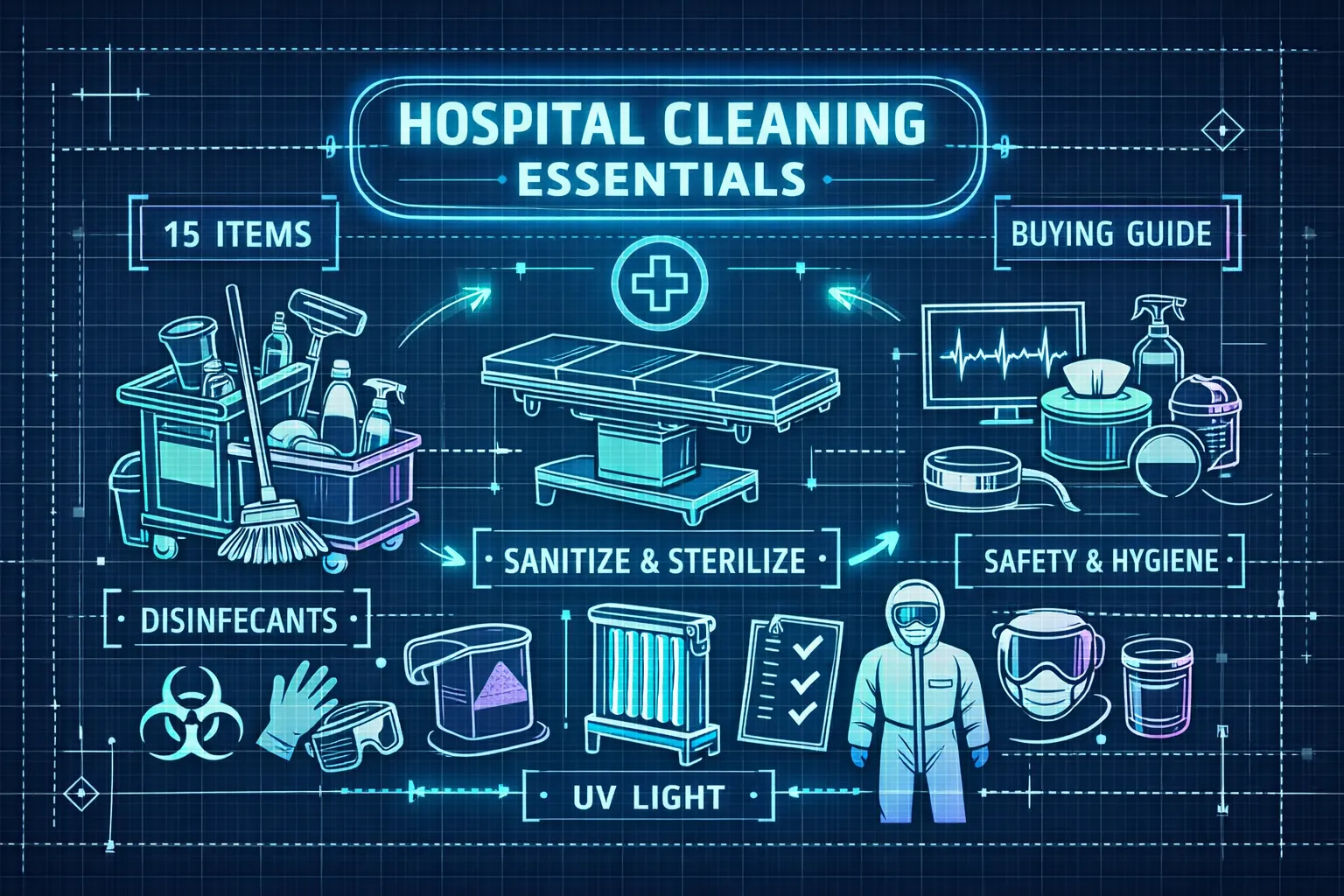
Clinical spaces fail when the wrong chemistry—or the right chemistry applied incorrectly—meets a high-risk pathogen. Cleaning is not a commodity: it is a matrix of product selection, contact time, material compatibility and disciplined application. This guide lists the 15 core product types used in healthcare, explains where each belongs, clarifies typical actives and dwell-time realities, and finishes with an audit-ready buying checklist. At Lab Dynamics we curate CE-certified clinical disinfectants and SOP-friendly protocols for busy lab and clinical teams—this piece reflects that scientist-led approach.
Why "hospital-grade" matters — a short infection-control primer
Three distinct tasks define surface and device hygiene: cleaning removes visible soil and organic load; disinfection reduces viable microorganisms to labelled claims; sterilisation aims for complete microbial elimination for critical items. "Hospital-grade" signals that a product's kill claims are backed by regulatory testing—EPA registration in the US or EN/ISO test evidence and CE documentation in the EU—and that the label specifies contact times, surface types and use limitations.
Risk and regulation drive selection. Match chemistry to the pathogen (MRSA/VRE, norovirus, Candida auris, C. difficile) and to item criticality (non-critical surfaces, semicritical or critical devices). A sporicidal product may be overkill for routine countertops but essential for C. difficile terminal cleans. Lab Dynamics supplies audit-ready SDS, CE/technical data and validation guidance so procurement aligns with SOPs and inspection expectations.
15 essential hospital cleaning products — what each does and where to use it
- Sodium hypochlorite (bleach) solutions/wipes. Broad sporicidal activity; first-line for blood spills and terminal cleaning for C. difficile when labelled for spores. Form: RTU wipes or diluted concentrate; typical in-use ppm varies by task—follow label; corrosive to metals and some polymers.
- Accelerated hydrogen peroxide (AHP) wipes & sprays. Oxidising, broad-spectrum with fast contact times—many formulations claim 1–5 minutes. Form: RTU wipes/sprays; instrument-friendly options available for electronics and incubators.
- Peracetic acid / hydrogen peroxide blends. High-level sporicidal activity suited to semicritical device reprocessing and tough terminal decontamination. Form: concentrates for automated washers or manual reprocessing; requires appropriate neutralisation and PPE.
- Quaternary ammonium compounds (quats). Routine low- to intermediate-level surface disinfection in wards and outpatient areas. Form: RTU or concentrates; generally 5–10 minute contact times and watch for residue on optics and some polymers.
- Alcohol-based surface wipes (70% IPA/ethanol). Rapid surface action for small, non-porous items (keyboards, probe handles); seconds-long kill but no long-term residual. Form: presaturated wipes; flammable—store appropriately.
- Phenolic disinfectants. Durable surface activity useful in some clinical spaces; exercise caution in neonatal areas and with porous surfaces. Form: RTU or concentrates; typical contact time 5–10 minutes.
- Sporicide formulations (labelled for C. difficile). Dedicated sporicidal agents or higher-concentration bleach for outbreak control and end-of-stay cleans. Form: RTU or wipes labelled sporicidal; strictly follow contact time on label.
- Enzymatic detergents. Enzymes remove proteinaceous soil—essential pre-clean for instruments before disinfection or sterilisation. Form: liquid concentrates for manual soak or washer-disinfectors.
- High-level chemical disinfectants (glutaraldehyde, OPA). For semicritical devices when heat sterilisation isn't an option; require ventilation, long contact times and PPE. Form: immersion solutions used under strict monitoring.
- Presaturated disposable disinfectant wipes. Point-of-care convenience to improve compliance; single-use reduces cross-contamination when staff follow dwell-time and discard protocols. Form: prepackaged wipes calibrated for contact time.
- Microfibre cloths and mop systems. Mechanical removal of bioburden improves overall efficacy—microfibre outperforms cotton. Form: reusable launderable cloths and microfibre mops; implement validated laundering and rotation.
- Colour-coded buckets & dedicated mop systems. Operational controls to separate clean and dirty tasks and zones; simple but effective risk control for pathogen spread. Form: modular mop systems and labelled buckets.
- Spill kits (blood/bodily-fluid kits). Immediate response supplies: absorbents, PPE and a labelled disinfectant for safe spill management. Form: grab-and-go kit with clear instructions and containment materials.
- Dilution control systems & dosing pumps (for concentrates). Ensure correct ppm and reduce operator error; critical when using chlorine or peracetic acid concentrates. Form: fixed dosing pumps or wall-mounted dispensers with calibration records.
- Hand hygiene consumables (alcohol rubs, soaps). Foundational infection control; placement, dispenser upkeep and refill stock levels are part of any cleaning strategy. Form: wall dispensers, pocket bottles and refill cartridges.
Quick takeaway: these items appear as wipes, sprays, concentrates or kits; contact times typically range from seconds (alcohol) to 10+ minutes (sporicides and some quats/phenolics). Lab Dynamics can supply CE-compliant product documentation and SDS to support local validation and audits.
Matching chemistry to the task — a practical decision matrix
Choose an agent by pathogen, surface type and device criticality. For spores and C. difficile use hypochlorite or validated peracetic-acid/sporicidal products; for routine high-touch rooms prefer AHP or quat formulations with practical contact times; for optics and electronics choose low-residue AHP or instrument-rated alcohol wipes; for semicritical devices select high-level disinfectants (OPA/glutaraldehyde) or validated sterilisation methods.
Material compatibility matters. Bleach corrodes metals and bleaches fabrics; quats can leave residues that affect optics; AHP is generally kinder to metals and polymers but always confirm compatibility. For IVF and other delicate workflows choose CE-approved, instrument-safe formulas and request material compatibility data and SDS before approval.
Contact times, dilutions and surface compatibility — operational rules
Clean first. Mechanical soil removal dramatically increases biocidal performance—always pre-clean visible contamination. Follow the label for dilutions and contact times rather than guesswork.
Practical dilution and contact rules to use as a starting point: routine non-blood surfaces with sodium hypochlorite are commonly prepared at ~1:100 (~500–600 ppm free chlorine); large blood spills use ~1:10 (~5,000 ppm) until decontamination is complete. For C. difficile use a product specifically labelled sporicidal. Many commercial disinfectants list 1–10 minute contact times; modern AHP formulations may claim 1 minute, but the surface must remain visibly wet for the full dwell period. Quats and phenolics frequently require 5–10 minutes; alcohols act quickly but provide little residual protection.
Application tips: keep surfaces wet for full dwell time, use single-pass unidirectional wiping to avoid recontamination, never over-dilute concentrates, and label prepared solutions with concentration and expiry time.
PPE, handling, storage and disposal — SOP-ready checklist
Before use consult the SDS. PPE typically includes nitrile gloves, eye protection and an apron; respirators are required for volatile or acid chemistries as specified on the SDS. Never mix bleach with acids or ammonia—dangerous gases form. Prepare dilutions in ventilated areas and prefer dosing systems for concentrates.
Store chemicals in original containers, segregated by incompatibility and away from food and clinical areas. Label any decanted solution with concentration and expiry. Dispose of contaminated wipes and PPE in accordance with local clinical waste regulations and SDS disposal guidance. Maintain regular staff training, spill drills and competency assessments as part of the SOP.
Buying and validation checklist — verify, source and document
- Regulatory & efficacy: Confirm EPA registration (US) or EN/ISO test claims and CE documentation (EU) that support the specific kill claims and contact times you need.
- Technical documentation: Obtain SDS, technical datasheets, material compatibility notes and any certificate/declaration of conformity for CE-marked products.
- Product form & dosing: Choose between wipes, RTU sprays or concentrates and verify available dosing pumps/dispenser systems to control ppm and reduce human error.
- Operational fit: Check instrument-safe claims, packaging sizes, open-bottle expiry and cytotoxicity considerations for delicate labs (e.g., embryology/IVF).
- Supply reliability: Confirm lead times, batch traceability, audit-pack availability and technical support for on-site validation.
How Lab Dynamics supports procurement: we offer scientist-curated, CE-certified disinfectant ranges (including instrument-friendly options such as UMONIUM38®), audit-ready SDS and declarations, and validation and SOP alignment support from our technical team. We deliver across the UK and EU and provide a B2B portal for reordering and traceability.
Summary
Match chemistry to the pathogen and item criticality, keep surfaces visibly wet for the full contact time, follow SDS and SOPs strictly, and verify regulatory evidence before purchase. For audit-ready documentation and CE-certified options tailored to clinical and IVF workflows, contact our technical team for procurement support.